Adding weights to your walk
A safe, gentle way to level up your walks — add intensity, build muscular endurance, and burn more without stressing your joints.
Walking is already one of the most effective, low-impact ways to stay active — but if you’re looking to gently level up your fitness, adding a little resistance can make a big difference. With the right approach, weights can help build muscular endurance, increase intensity, and boost calorie burn while keeping your joints happy.
Start with a weighted vest
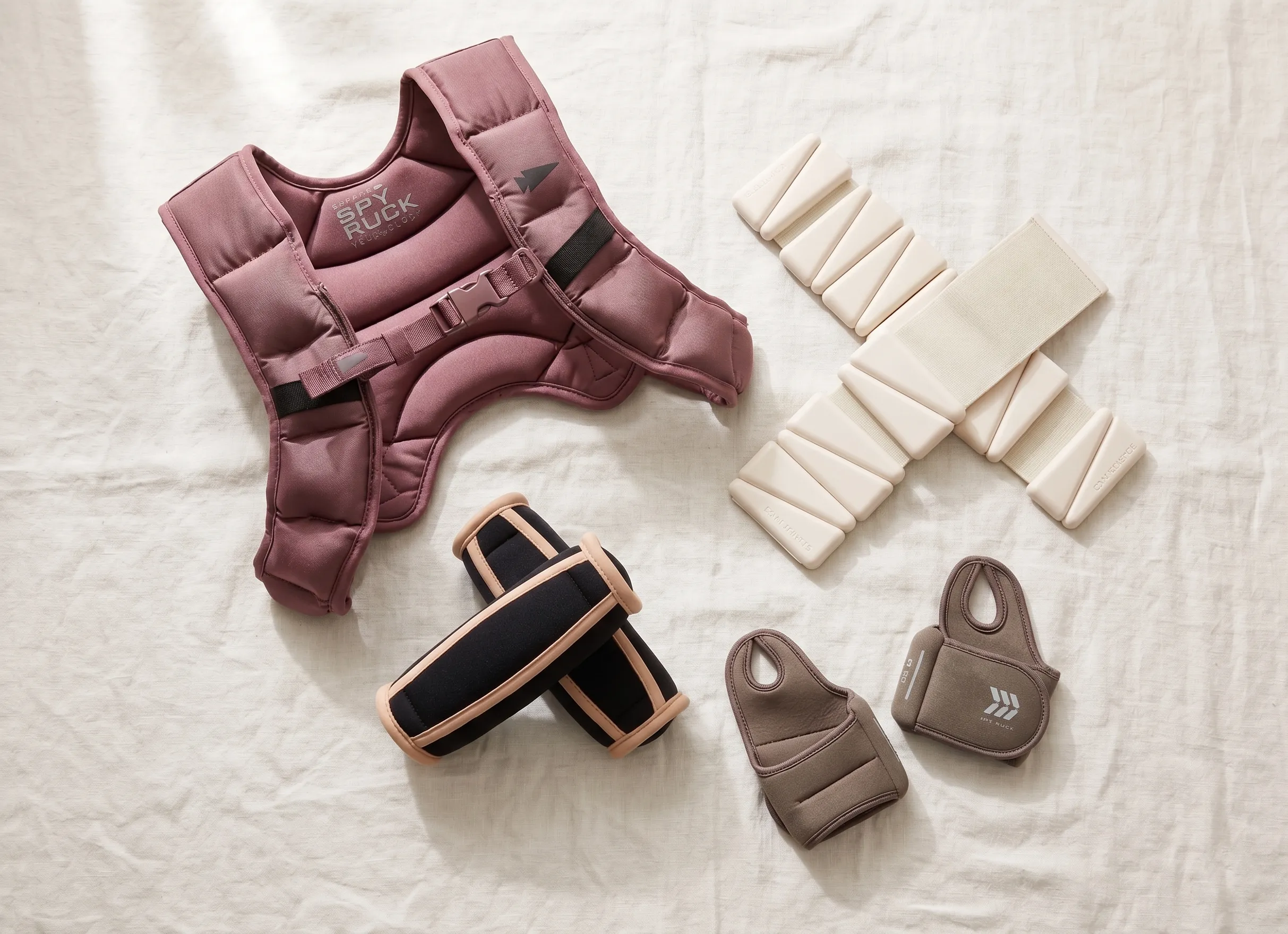
A weighted vest is one of the easiest ways to increase intensity without disrupting your natural walking form. Unlike hand weights, a vest keeps your hands free and distributes the load evenly across your torso.
Choose a vest that allows you to adjust the weight (start with 5–8 pounds, then build up). Make sure it fits snugly but comfortably. Keep your posture tall: shoulders back, core engaged, arms swinging naturally.
A vest is a difficulty dial.
It makes the same route meaningfully harder.
Add light wrist weights
Wrist weights are a subtle but effective way to engage your arms during walks — especially if you enjoy pumping your arms or adding intervals of brisk walking. Stick with light weights (1–2 pounds per wrist). Keep movements controlled, and try short intervals: 10–15 minutes of your walk, then remove if you feel fatigued.
Try ankle weights — but sparingly
Ankle weights can strengthen your lower body and add a little extra challenge — but they should be used with caution. Too much weight can strain hips or knees.
Stick with very light weights (1–2 pounds per ankle). Use them on shorter walks or slower-paced strolls rather than long, brisk routes. If your joints feel achy, swap them for a vest instead.
Mix it up with intervals
You don’t need to wear weights for your entire walk. Alternating between weighted and unweighted intervals keeps things balanced and prevents overuse.
Sample: 10 minutes with a vest, 10 minutes with wrist weights, then 10 minutes with just your bodyweight focusing on posture and breathing.
The biggest key to walking with weights is paying attention to how you feel. Soreness in your muscles? That’s normal. Sharp pain in your joints? That’s a sign to stop or scale back.
What to look for.
Fit & adjustability.
A vest or cuffs that don’t bounce, rub, or shift. Adjustable straps and gradual weight options are safest.
Start light.
3–5 lbs (vest) or 1–2 lbs (wrist/ankle) is plenty for most people. Increase slowly.
Even distribution.
Vests distribute load over the torso. Wrist/ankle weights add load at extremities — use light and short.
Comfort & material.
Breathable fabrics, soft linings, wide straps. Velcro and padded areas help avoid chafing.
Health checks.
If you have joint pain, bone density concerns, or back issues, check with a healthcare or fitness professional.
Not too much.
Use weights for part of your walk (intervals) rather than full duration, especially at first. Allow rest days.
A gentle 4-week plan.
Week 1.
3 walks total. Vest worn for 5 minutes at the start of a walk, then removed. One walk with Bala Bangles or 1-lb wrist weights for 5–10 min. Rest and stretch.
Week 2.
Vest time increased to 10–12 min in one walk. On another walk, add ankle weights (1–2 lb) for a short segment (5 min). Keep rest days.
Week 3.
Two walks with the vest: one with slightly heavier setting or longer time, the other with wrist or ankle weight intervals. Add hills or inclines if safe.
Week 4.
One walk with vest for 15–20 min, one walk mostly unweighted focusing on speed and form, and another with wrist or ankle weight intervals. Always check for soreness.
The bottom line
Adding weights to your walks doesn’t need to be complicated — or intimidating. Whether it’s a comfortable vest, light wrist cuffs, or a short ankle-weight session, these simple tools can help you build strength and stamina while keeping walks fun and effective. Start light, stay consistent, and let your body guide you.
Coached walking, on iOS.
Spanno is the audio coach for women over 40. Real intensity, no impact, no guesswork. Free to start.