What is coached walking?
A real coach in your ears, structured pacing, intervals — the Peloton model, applied to walking. The story of why Spanno exists.
Here is the small, specific moment that started this entire thing.
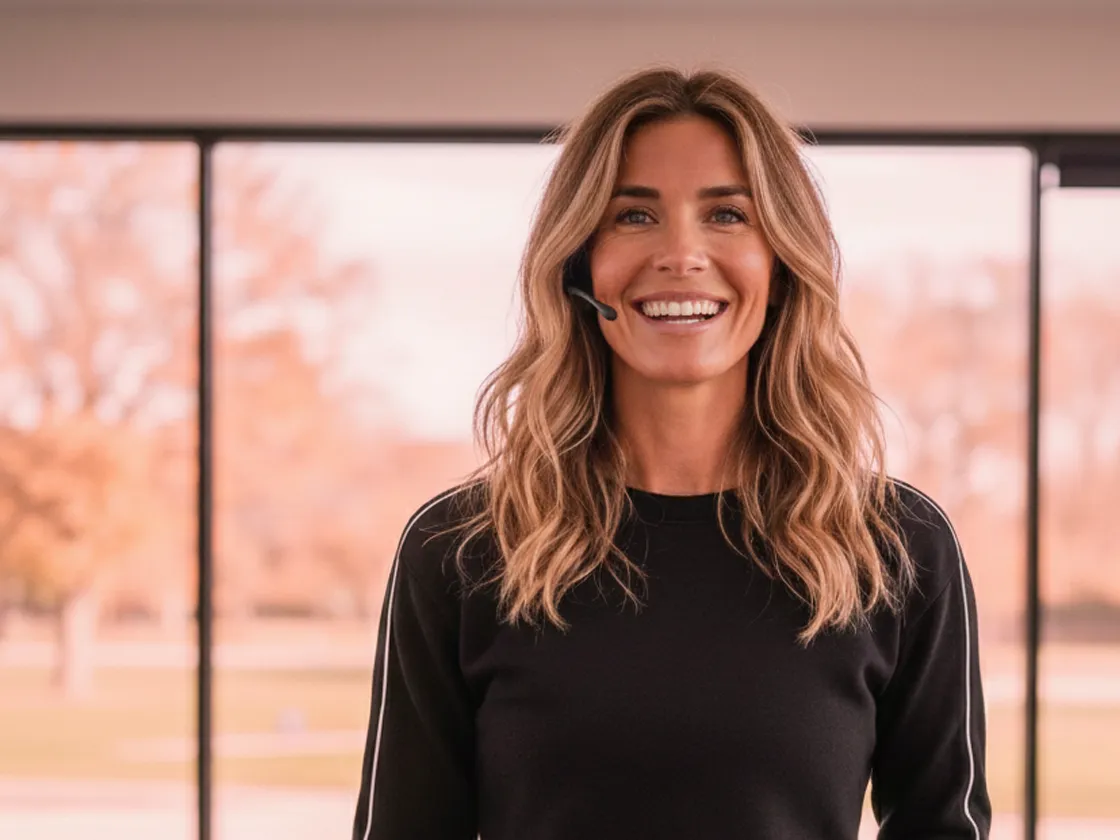
I was on a Peloton — recovering from a hip injury, asthma kicking up, in the kind of body inventory where every form of cardio I had ever loved had quietly closed off — and I clicked on a class that, for whatever reason, was a walking class.
I had no expectations. I was honestly only doing it because I couldn’t do anything else.
What I got was a real instructor. Real pacing. Real intervals. Real music. A real workout. I finished it sweating, smiling, and quietly furious that this had not previously been a category I knew about. Because the second the class ended, I realized something: walking — the most universally accessible form of exercise on planet earth — had basically no version of itself with a coach in your ears. Not really. Not the way every other form of cardio did.
That was the moment Spanno started. So when I tell you what coached walking is, what I’m really telling you about is the thing I went looking for, couldn’t find anywhere outside that one Peloton class, and eventually built because I needed it to exist.
The simplest definition
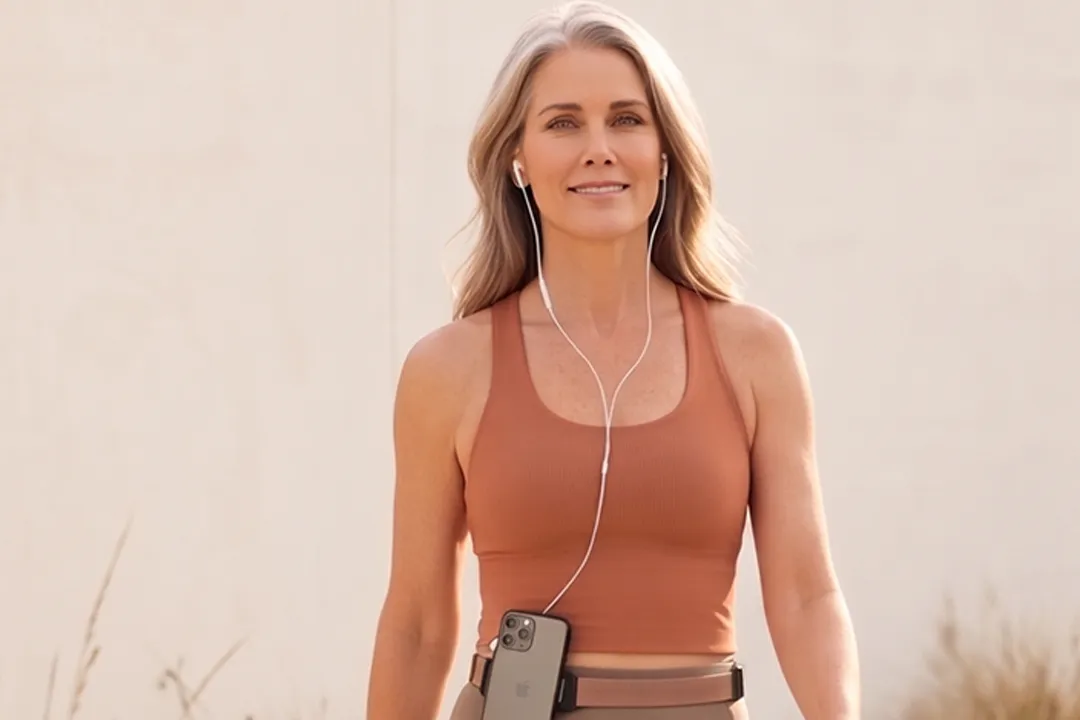
Coached walking is what it sounds like: a real coach guiding you through a structured walk in real time, through audio in your headphones, the same way an instructor leads you through a Peloton class — except the workout is walking instead of cycling.
If you’ve ever taken a Peloton ride, a Barry’s class, a Tonal session, an Orangetheory workout, or any group fitness class with a live or recorded instructor, you already know the format. Someone who knows what they’re doing structures the workout. They set the pace. They tell you what to do and when. They motivate you through the harder parts. They give you a beginning, middle, and end. The structure does the thinking. You just show up and follow along.
Coached walking takes that exact model and applies it to walking. That’s the whole thing.
Why this didn’t exist sooner
Walking has always been good for you. Nothing about that is new. What’s relatively new — and what nobody really told us until the last few years — is that structured walking is meaningfully better for you than unstructured walking. Same number of steps, same number of minutes, different protocol, different results.
The research is well-established. The Japanese interval walking method developed at Shinshu University, plus the broader literature on pace variation and intervals, is fifteen-plus years of evidence converging on the same point: walks with intentional structure outperform walks without it, even at identical total energy. It’s not a marginal effect. It’s a substantial one.
The catch — until recently — was that almost nobody was actually walking with structure. Most walks default to a comfortable, conversational, single-pace stroll. That’s a lovely thing. It’s just not the version of walking that’s doing the most for your body. And without somebody in your ear telling you to push, the human default is comfort. Every time.
A coach changes the default.
That's the whole leverage point.
The Anatomy
What an actual session contains.
Different apps and instructors do this differently. Most coached walking sessions contain some combination of these.
Pacing.
A coach setting the rhythm of the walk — when to walk slow, when to push, when to recover. The part that does the most work physiologically, and the part you’d basically never do as well on your own.
Structure.
Sessions might be steady-state, interval-based, hill-focused, weighted-vest-friendly, or recovery-paced. The coach makes sure you’re doing the right kind of walk for what you’re trying to accomplish that day.
Cueing.
Posture, breathing, stride, foot strike. Small technique adjustments a good coach naturally weaves in — and that you would basically never think about on your own.
Music.
Sometimes integrated, sometimes scored to the pacing. Music makes hard intervals feel easier — that’s not preference, that’s research. (Spanno’s playlists are heavily 80s and 90s. A hill I’m willing to die on.)
A defined start and finish.
The session has an arc. You know when you’re warming up, when you’re working, when you’re cooling down. You finish having done something with shape — not having drifted around for thirty-five minutes.
Context.
The good ones aren’t just yelling at you to walk faster. They’re telling you why this kind of walk is the right one for today, and what’s happening in your body during it. The coaching is educational, not just motivational.
Not the same thing
How it's different.
vs. a podcast
A podcast occupies your attention during a walk. The walk happens around the audio. You’d basically walk the same way whether or not the podcast was playing. The episode is the experience; the walk is the backdrop.
A coached walking session inverts that. The audio is about the walk. It’s responsive to the walk. It changes the walk. You finish having done a structured, purposeful workout — instead of having listened to a podcast while incidentally moving.
vs. a silent walk
Silent walking — no headphones, no audio, just you and the world — is also a useful practice. It’s a nervous-system reset. A meditative practice. Particularly good for the first or last walk of the day.
It’s also the easiest possible version of a walk. The brain that decides when to push and when to recover is the same brain that’s trying to relax. So silent walks do a different job than coached walks — and most weeks, you probably want some of each.
Who it's for
Especially good for.
Walkers who've plateaued.
If your daily walks are no longer producing the fitness, energy, or body composition results they used to — or never did — the most likely reason is that your walking has flattened into a single pace. Same time on your feet, much more output is available with a coach.
Women in perimenopause and beyond.
The group coached walking serves most precisely, and the group I built Spanno specifically for. Intensity matters more in midlife, not less — but the kind of intensity matters too. Cardiovascular and metabolic stimulus without the joint pounding of running.
People who don't want to design the workout.
The cognitive load of figuring out what to do, for how long, at what intensity, is enormous. Coached walking eliminates almost all of it. You open the app, pick the kind of walk you want today, and follow along.
What it isn’t
A complete training program by itself. Walking is a powerful piece of a fitness life, but it doesn’t replace heavy resistance training — and on its own, it doesn’t deliver the bone-loading impact that protects against osteoporosis. The complete picture, especially for women in midlife, includes lifting, some impact work, and walking — coached or otherwise — as a major piece. (I lift. I jump. I walk. They all live in the same week.)
It also isn’t a slow stroll dressed up with a soundtrack. The good coached walking sessions are real workouts. You’ll sweat. Your heart rate will climb. You’ll be tired afterward. That, fully, is the point.
The category, in one sentence
Structured, paced, audio-led walking — designed to make every walk count.
It’s a category that didn’t really exist a few years ago. It exists now because the underlying research, the technology, and the cultural moment all caught up at the same time. And it’s particularly suited for the millions of women in midlife whose bodies are asking for smart, structured intensity — without the impact cost of the workouts they used to do.
If you’ve been walking but not getting more out of it, this is the upgrade you’ve been missing. I built Spanno because I needed it. Now it exists.
That’s the short version. Welcome.
Coached walking, on iOS.
Spanno is the audio coach for women over 40. Real intensity, no impact, no guesswork. Free to start.