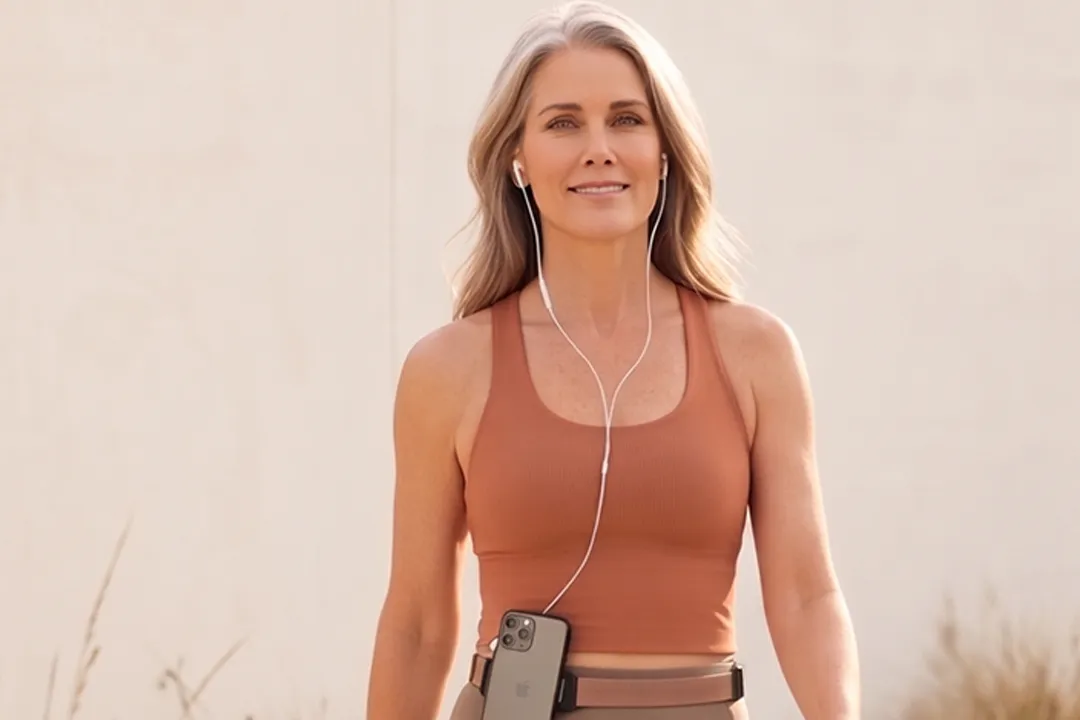
Walking form, basics
Small form upgrades — posture, eyes, arms, foot strike — that quietly improve every walk. Plus what changes when you go fast.
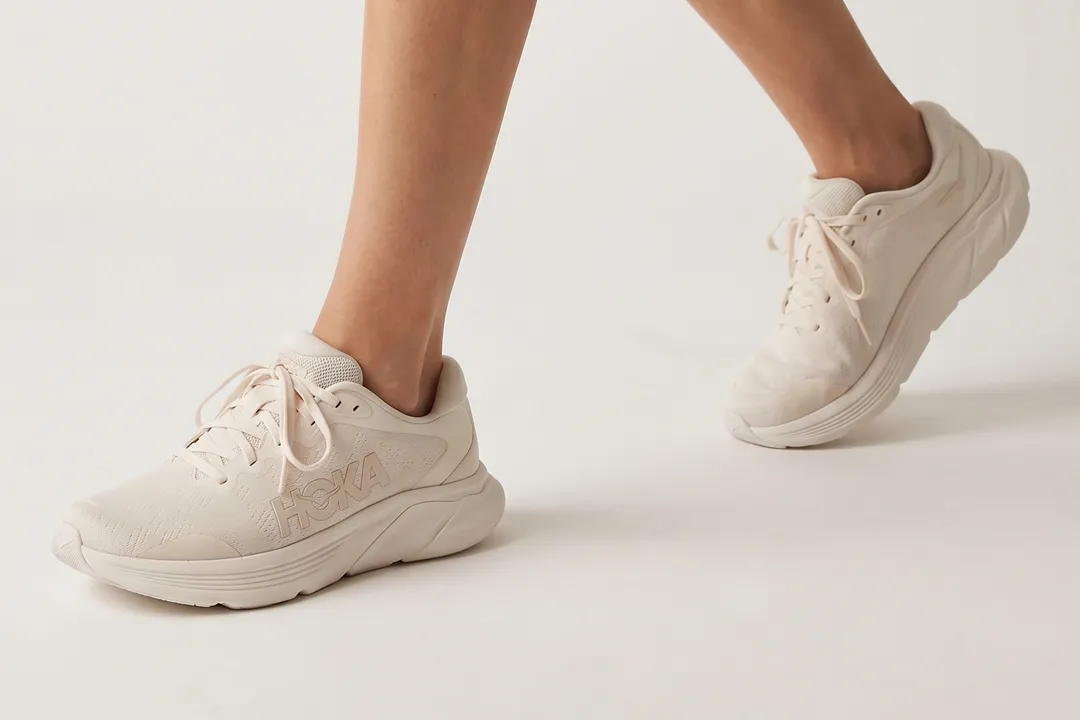
Walking is the most automatic thing your body does. You don’t think about it. You haven’t thought about it since you were two. That’s mostly a feature.
The honest reality is that most of us have small walking habits — from phone posture to overstriding to shuffling — that don’t matter much for one walk but can add up over hundreds of miles a year. Small form upgrades are some of the highest-leverage changes you can make to a walking practice. They cost nothing. They don’t require equipment. They make every walk you do count for slightly more, and slightly safer.
A note before any of the cues below: form cues should make walking feel easier, not more rigid or self-conscious. If a cue creates pain, awkwardness, or overthinking, drop it. The goal is small natural improvements, not policing every step.
The stack
The single most important thing about walking form is posture — and specifically, the alignment of your head, ribs, and hips over your feet. Coaches sometimes call this “the stack.”
Head over shoulders.
Not pushed forward (the universal phone-and-laptop posture). Imagine a string from the ceiling lightly pulling the crown of your head up.
Ribcage over hips.
Not collapsed forward, not arched back. A neutral, tall position through the torso.
Hips over feet.
Not pushed forward, not behind. The center of mass stacked cleanly through the body.
When the stack is reasonably organized, many people feel more efficient, breathe more easily, and distribute effort more comfortably through the body. When the stack is off — usually with the head jutting forward and shoulders rounded — every step asks other muscles to compensate.
The simplest cue: stand tall. Imagine you’ve just been told a friend is across the street and you’re trying to look elegant for a second. That’s roughly the posture.
Where your eyes go
This sounds minor and isn’t. Most of us walk looking down — at the sidewalk, at the phone, at our feet. The head goes with the eyes. When the head drops forward, the entire stack collapses, the shoulders round, and the chest closes off your breathing.
Look about ten to fifteen feet ahead of you. Not at the horizon, not at your feet — roughly the distance you’d be looking if you were watching where someone in front of you was walking.
This single change often improves posture, shoulder position, and breathing almost immediately. It’s also, weirdly, the change people resist the most. Try it for one walk and notice the difference in how your shoulders and neck feel afterward.
Your shoulders and arms
Shoulders: down and back, not up at your ears. Most of us carry shoulder tension we don’t notice. A useful cue: roll your shoulders back and down once at the start of the walk, and a few more times along the way.
Arms: bent at roughly 90 degrees, swinging from the shoulder, in opposition to your legs. If your arms are swinging naturally and freely, the opposition happens automatically.
Hands: relaxed. Not clenched. Imagine holding a small egg in each hand without crushing it.
The arms matter more than people think — particularly for faster walking. They’re also the easiest place to leak energy. Stiff arms held still at your sides force your legs to work harder.
Foot strike and stride
This is where most of the bad form information on the internet lives. People will tell you very specific, very confident things about exactly how your foot should land. The honest truth is there’s a fair amount of individual variation in what works.
A few principles that hold up:
- Foot lands close to your center of mass — not reaching far out in front of your body. Overstriding is harder on knees, hips, and lower back.
- Heel-to-toe roll is the standard pattern at walking speeds. Heel first, roll through the midfoot, push off through the ball and big toe.
- Push-off matters. A lot of walkers shuffle. Driving through the ball of the foot at the back of each stride engages your glutes and calves.
Hips and core
Your hips should stay relatively level as you walk — not dipping side to side dramatically. A noticeable hip drop with each step often points to weakness in the glute medius, worth addressing in your strength work.
Your core should be gently engaged — not braced, not held tight, but aware. Imagine you’re zipping up a tight pair of jeans, just enough to lightly engage the lower abdominals.
Breathing
Breathe through your nose when it feels natural, especially during easier walks. Nasal breathing can help keep effort easy and encourage slower, calmer breathing. At higher intensities you’ll naturally switch to mouth breathing, and that’s fine.
Longer exhales can be a useful calming cue. Try inhaling for three steps and exhaling for four during easy walking. The slight asymmetry is the part most people find subtly settling.
The Interval Section
What changes when you walk fast.
Faster walking — intervals, brisk pushes, fast finishes — uses the same form fundamentals, with a few specific adjustments.
Cadence first, stride second.
The natural temptation when you want to walk faster is to take longer steps. Don’t. Longer steps mean overstriding — harder on the knees and less efficient. Faster walking comes from more steps per minute, not from reaching further. Quicker, shorter, lighter steps.
Your arms drive the pace.
At higher speeds, your arms set the rhythm and your legs follow. Keep the 90-degree bend, swing more vigorously through the shoulders, and your legs will speed up to match.
Lean from the ankles, not the hips.
A small forward lean from the ankles (an inch or two from vertical) makes faster walking more natural. Do not bend forward from the waist — that collapses the stack and stresses your back.
Posture stays the same.
The stack doesn’t change just because you’re going faster. If you’re slumping at higher speeds, slow down and reset. Bad form at speed is much harder on the body than bad form at a stroll.
Don't slump on recovery.
After a hard interval, the temptation is to droop your shoulders and shuffle. Resist it. Recovery walks should look like easy good walks, not defeated ones.
A simple body scan for any walk
Once every five or ten minutes during a walk, run a quick check from the top down:
- 1. Head over shoulders — am I jutting forward?
- 2. Eyes up — am I staring at the ground?
- 3. Shoulders down and back — are they at my ears again?
- 4. Arms swinging freely — or am I holding them stiffly?
- 5. Core gently engaged
- 6. Push off through the back foot — am I shuffling?
The whole scan takes about ten seconds. It catches the form decay that naturally happens over a long walk. The walks where you do this are noticeably better than the walks where you don’t.
(This is, candidly, one of the things a coached walking session does for you automatically. Spanno coaches drop short form cues at the right moments mid-session — eyes up, shoulders back, drive through the back foot — so you don’t have to remember to scan yourself. Most users find their form has quietly improved a few weeks in, without ever having sat down to learn it explicitly.)
Walking is supposed to feel easy
Walking form is not a thing you have to obsess over. The biggest improvements come from a few small, low-effort cues — head up, eyes ten feet ahead, shoulders back, arms swinging, push off through your back foot — practiced enough that they become automatic. Once they are, you stop thinking about them, and your walks just work better.
The point is not to walk perfectly. The point is to walk well enough that thousands of miles over the next few decades treat your body kindly. Try one cue at a time. Don’t try to fix everything at once.
Coached walking, on iOS.
Spanno is the audio coach for women over 40. Real intensity, no impact, no guesswork. Free to start.